ASI: What Is Artificial Superintelligence? The Future of AI Explained
Artificial Superintelligence (ASI) – Complete Guide 2026
$379 billion. That is the estimated size of the global artificial intelligence market in 2026. According to current projections, that figure could reach $2.9 trillion by 2035, or potentially $3.6 trillion if artificial general intelligence (AGI) arrives on schedule.
I came across these figures while preparing a report on the future of AI, and the more I read, the more I felt that this topic needed to be discussed in plain English, without unnecessary jargon or panic. Between clickbait headlines about AI destroying everything and marketing promises that everything will change overnight, it can be difficult to understand where we actually stand.
In this guide, we will look at what artificial superintelligence is, how it differs from AGI and today's AI, why the race toward increasingly capable systems matters, which industries could be transformed, and what governments are doing to prepare for the future of advanced AI.

What Is Artificial Superintelligence (ASI)?
Let’s start with the basics. The terms AI, AGI and ASI are often used interchangeably, even though they describe very different levels of artificial intelligence.
Narrow AI (or specialized AI) refers to the systems we use today. Modern AI models can write, code, analyze images, generate content and perform many sophisticated tasks, but they remain limited by their capabilities, training and operating environment.
AGI (Artificial General Intelligence) refers to a hypothetical AI system capable of learning, reasoning and performing a broad range of intellectual tasks at a level comparable to humans across different domains.
ASI (Artificial Superintelligence) goes one step further. It describes a hypothetical intelligence that would surpass human capabilities across virtually every cognitive domain, including science, mathematics, creativity, strategy and problem-solving.
The distinction matters because much of today's discussion about advanced AI concerns the possible transition from increasingly capable AI systems toward AGI and, potentially, ASI.
| Stage | What the system could do | Status in 2026 |
|---|---|---|
| Narrow AI | Highly capable at specific tasks | Widely deployed |
| AGI | Broad human-level intelligence across domains | Not universally defined or confirmed |
| ASI | Intelligence exceeding humans across most or all cognitive domains | Hypothetical |

From AGI to ASI – The Race Has Already Begun
The timeline toward AGI remains uncertain, but AI capabilities have advanced rapidly. Several developments are particularly important when discussing the future of increasingly autonomous AI systems.
First, AI systems are becoming better at reasoning. New generations of models can break complex problems into smaller steps, use external tools, analyze information and revise their outputs.
Second, autonomous AI agents are emerging. Instead of simply answering questions, some systems can execute multi-step workflows, interact with software and complete tasks with less direct human intervention.
Third, investment is increasing. Technology companies and governments are investing heavily in computing infrastructure, semiconductors, data centers and energy to support increasingly capable AI systems.
One major uncertainty remains: the speed of future progress. Some researchers expect gradual improvements, while others have proposed scenarios in which increasingly capable systems could accelerate AI research itself. At present, there is no consensus on how such a transition would unfold.

The AI Market in 2026 – The Numbers That Really Matter
The global AI market is expected to continue expanding rapidly through the next decade. Some forecasts place the market at hundreds of billions of dollars in 2026, with multi-trillion-dollar scenarios possible by 2035.
Two broad scenarios are often discussed:
- Continued AI growth: AI adoption expands steadily across businesses and consumers while infrastructure and regulation mature.
- Faster growth following major capability breakthroughs: More advanced AI systems could accelerate productivity, research and business adoption.
These figures should be interpreted as projections rather than predictions. Market estimates can change substantially depending on economic conditions, regulation, technological progress, energy availability and business adoption.
Another important trend is the increasing amount of capital flowing into AI infrastructure, including chips, data centers and energy systems. These investments provide the physical foundation required to operate increasingly sophisticated AI models.

The Sectors ASI Could Transform Most Deeply
The potential impact of advanced AI becomes easier to understand when looking at specific industries. However, the scale and timing of these changes remain uncertain.
Healthcare could benefit from faster drug discovery, improved diagnostics, medical research and more personalized treatment. AI systems are already being used in several areas of biomedical research.
Finance is another highly data-driven sector. Applications include fraud detection, risk analysis, financial forecasting and automated workflows.
Education could be transformed through personalized AI tutors, adaptive learning systems and automated educational support.
Industry and logistics could benefit from improved supply-chain management, predictive maintenance, robotics, optimization and accelerated research and development.
Employment is another major question. AI may reduce the need for certain repetitive tasks, including some forms of administrative, customer-support and knowledge work. At the same time, technological transitions can create new roles and industries. The scale and speed of these changes remain uncertain.

Regulation – Who Will Control Superintelligence?
Governments and international organizations are developing different approaches to AI governance. Their frameworks vary according to their regulatory priorities, economic objectives and national strategies.
Europe has adopted a risk-based regulatory framework through the European AI Act, which establishes obligations for different categories of AI systems.
The United States has generally placed greater emphasis on technological innovation, competitiveness and sector-specific approaches, although the regulatory landscape continues to evolve.
China has developed its own AI governance framework, combining technological development with regulation, national security and information governance.
One of the major challenges is that current AI regulations were largely designed around existing systems. A future system with capabilities approaching AGI or ASI could raise questions that existing frameworks were not designed to address.

Should We Be Afraid of Superintelligence?
Artificial superintelligence remains hypothetical, but researchers and policymakers have identified several potential risks associated with increasingly capable AI systems.
One major concern is the AI alignment problem: ensuring that highly capable systems reliably follow human intentions and remain subject to meaningful human oversight.
Another concern is the concentration of power. If extremely capable AI systems were controlled by only a small number of organizations or governments, they could create significant economic and geopolitical consequences.
Employment disruption is another important issue. AI could automate tasks currently performed by humans, particularly in highly digital and repetitive occupations.
At the same time, advanced AI could provide major benefits, including scientific discovery, medical research, improved productivity and solutions to problems that are difficult to address using existing technologies.
The central challenge is therefore not simply whether ASI would be beneficial or harmful. It is how societies develop, govern and deploy increasingly powerful AI systems.
FAQ – Artificial Superintelligence
What is artificial superintelligence in one sentence?
Artificial superintelligence (ASI) is a hypothetical form of AI that would exceed human intellectual capabilities across a very broad range of cognitive tasks.
What is the difference between AGI and ASI?
AGI generally refers to broad, human-level artificial intelligence across many domains, while ASI refers to an intelligence that would substantially exceed human capabilities.
When will artificial superintelligence arrive?
There is currently no reliable date for the arrival of ASI. Estimates about AGI and ASI vary widely among researchers, and there is no scientific consensus establishing a specific timeline.
Could the AI market reach several trillion dollars?
Some market forecasts project multi-trillion-dollar AI markets during the 2030s. These figures are projections rather than guarantees and depend on technological, economic, regulatory and adoption assumptions.
How can I prepare for the future of AI?
A practical starting point is to understand how current AI tools work, experiment with them in real-world tasks and follow developments in AI research, regulation and business adoption.
The Road Ahead – Understanding the Future of AI
From today's specialized AI systems to the possibility of AGI and, eventually, artificial superintelligence, the development of AI could become one of the most important technological transformations of the coming decades.
Market projections point toward enormous economic growth, while advances in computing, AI agents and machine reasoning continue to expand the capabilities of current systems.
But the exact path remains uncertain. We do not know when AGI will emerge, whether ASI is technically achievable, or how quickly society could adapt to such systems.
What we can do is understand the technology, follow the evidence and prepare for different possible futures. The better we understand the direction of AI, the better equipped we are to make informed decisions about it.
Go Deeper Into the AI Market and the Future of Intelligence
If you want to explore the numbers behind the AI boom and the possible evolution from today's AI systems toward AGI and superintelligence, these two reports provide a deeper look at the market, technology, investment and long-term scenarios.
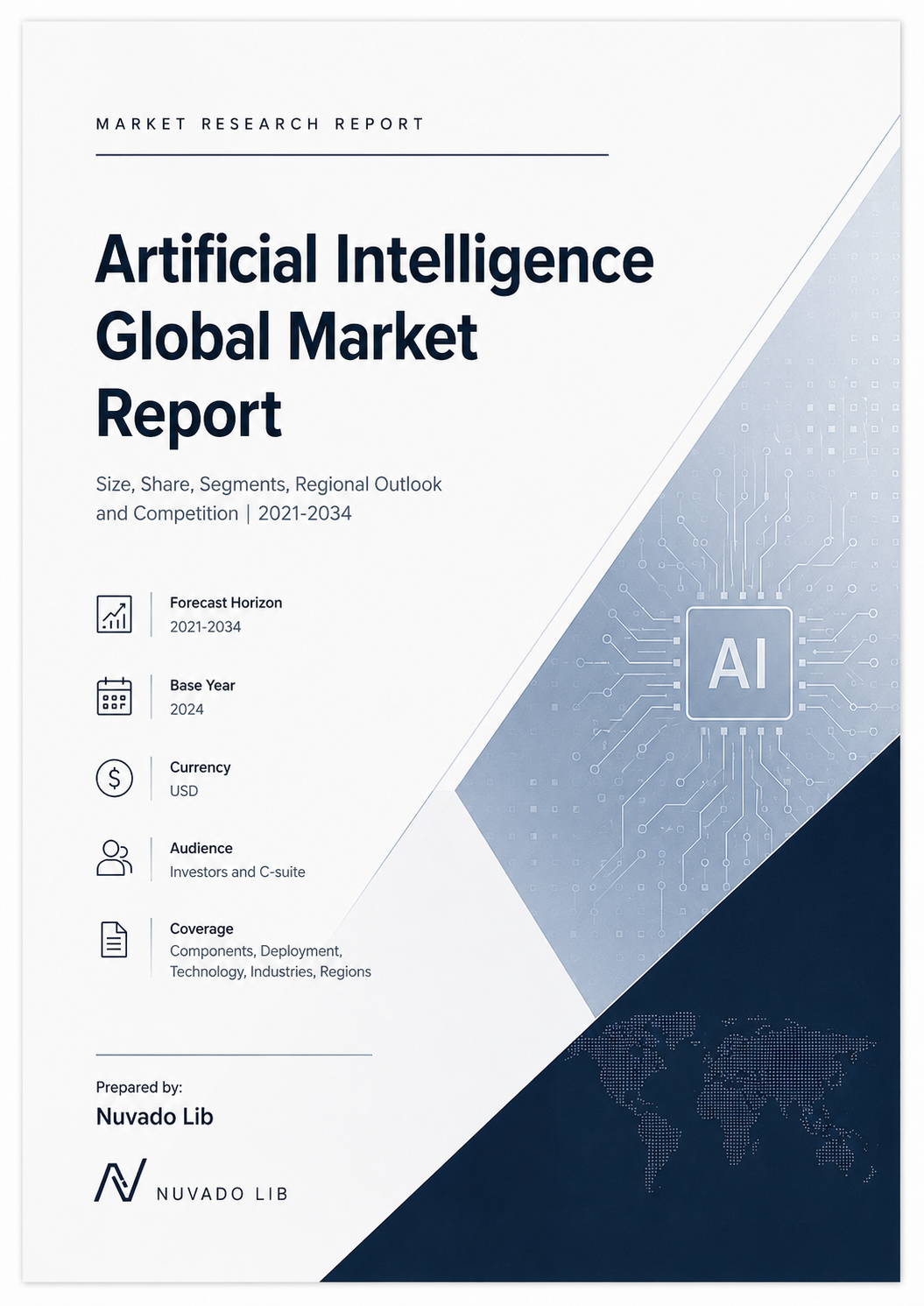
Global Artificial Intelligence Market Report | 2021–2034
A comprehensive, data-driven analysis of the global AI market, built for investors, C-suite executives and strategy teams who need reliable figures to make informed decisions.
Pay what you want: €0.00 minimum.
Get the Full Market Report →
The Road to AGI and Superintelligence
The AI market hit $379 billion in 2026. By 2035, it could reach $2.9 trillion — or $3.6 trillion if AGI arrives on schedule.
This report maps the entire road: from today's narrow AI, through the sprint toward AGI, to the open question of superintelligence itself.
Explore market scenarios, capital flows, sector disruption and regulation in one decision-grade reference designed to help readers understand the forces shaping the next decade of AI.
Pay what you want: €0.00 minimum.
What Do You Think About the Next Decade of AI?
How are you preparing for the changes that artificial intelligence could bring over the next decade?
Have a perspective to share? Leave a comment below. I read the discussions and do my best to respond to every thoughtful question or opinion.
If you found this article useful, consider sharing it with someone interested in artificial intelligence, emerging technologies or the future of the digital economy.
Every share helps Nuvado AI continue publishing practical, research-driven content about AI, technology and the ideas shaping the future.
Leave a Comment

Commentaires
Enregistrer un commentaire